Introduction
Psychology research consistently shows that when students are genuinely interested in a topic, they focus more attention, spend more time exploring it, and as a result, learn more deeply. Interest fuels engagement, and engagement fuels understanding. This principle sits at the heart of the Can Do Kids Worldwide approach.
The Can Do Spirit: Attitudes, Skills, and Abilities
Life education is fundamentally about cultivating a "Can Do Spirit." This can be learnt. It is a combination of positive attitudes, practical skills, and refined abilities that improves through consistent practice.
Education's true function is to develop confident, capable individuals who believe in their own potential. By nurturing self-belief alongside knowledge, we prepare students not just to pass exams, but to tackle real-world challenges with resilience and creativity.
Educators have a unique opportunity to introduce "Can Do" approaches into the classroom, showing students they can be achievers by turning potential into performance. By shifting the focus from passive listening to active participation, educators help students build the confidence to say, "I can do this."
The 75% Active Classroom
To foster this spirit, lessons can be transformed into active learning. Students learn best by "exploring and doing." Educators can develop this by implementing active classroom projects such as these:
Map Explorers
Instead of just looking at a map, students draw their own map of a country. In groups of two or three, they can then discuss and develop a travel plan and present their key route points and cultural highlights to the class.
School Improvement Duos
Students can meet in pairs to brainstorm constructive ways to improve their school environment with regard to health, play, and relationships. They can then practise their writing and persuasion skills by distilling these ideas into clear, impactful paragraphs.
Creative Teamwork
Cooperative projects in music, art, and conversation where students help each other, leading to better results than when working alone.
Active learning builds competence, and competence builds confidence. When students experience success through their own efforts, they develop an internal sense of capability that extends far beyond the classroom.
Constructive Thinking: Learning from Amazing People
Students can be guided to use Constructive Thinking, a method where they develop their own ideas whilst helping others refine theirs. We encourage them to learn from history's "Can Do" giants – to see how they turned negatives into positives:
- Albert Einstein: Turned early learning struggles into a revolutionary way of thinking about the universe.
- Marie Curie: Turned the negative of not being allowed to go to university in Poland, because only boys were allowed entry, into a double Nobel Prize-winning career.
- Nelson Mandela: Turned 27 years of imprisonment into a positive force for peace and national unity.
- Helen Keller: Turned the silence and darkness of her world of blindness into a global message of hope and ability.
These exemplars demonstrate that education should equip students with the mindset to overcome obstacles. By studying how others transformed challenges into achievements, students learn that setbacks are simply stepping stones to success.
The Can Do Kids Band as Exemplars
To bring global learning to life, we introduce the Can Do Kids Band—a diverse group of virtual young characters who embody the "Can Do Spirit". Students at primary level can join them on virtual tours to learn about countries and cultures across the world.

Meet the band:
- Ravi: The cool bass guitarist from New Delhi, India.
- Lin: The talented keyboard player from Beijing, China.
- Amy: The versatile vocalist from California, USA.
- Ace: The energetic drummer from Cape Town, South Africa.
- Oz: The laid-back lead guitar player from the beautiful beaches of Sydney, Australia.
These characters are not just entertainment—they are role models who embody resilience, curiosity, and the confidence to explore new cultures and ideas.
A Call to Action: Group Active Learning
The challenge for educators today is to move beyond the textbook and set group active learning projects, rather than isolated individual tasks. By working in teams, students have the opportunity to share their work and compare their results with others.
This process of sharing and comparing allows students to see different perspectives and improve their own performance across every subject—whether it is solving problems in Maths, researching History and Geography, or mastering Reading, Writing, and Literature.
Cooperative learning reinforces the core function of education: to create confident, self-reliant individuals who can work with others, communicate effectively, and approach problems with optimism and determination. These are the "Can Do" people our world needs.
Empower Your Students
Through cooperative projects, supported by the resources at www.candokidsworldwide.com, we empower students to become "Can Do" achievers who learn from one another, and are ready to turn the challenges of tomorrow into the positives of the future.
Dr Charles Margerison is a psychologist, author, and President of Amazing People Worldwide. With decades of experience in educational technology and storytelling, he co-founded Amazing People Schools to inspire children through interactive learning and the power of storytelling.
Classroom Activity Idea
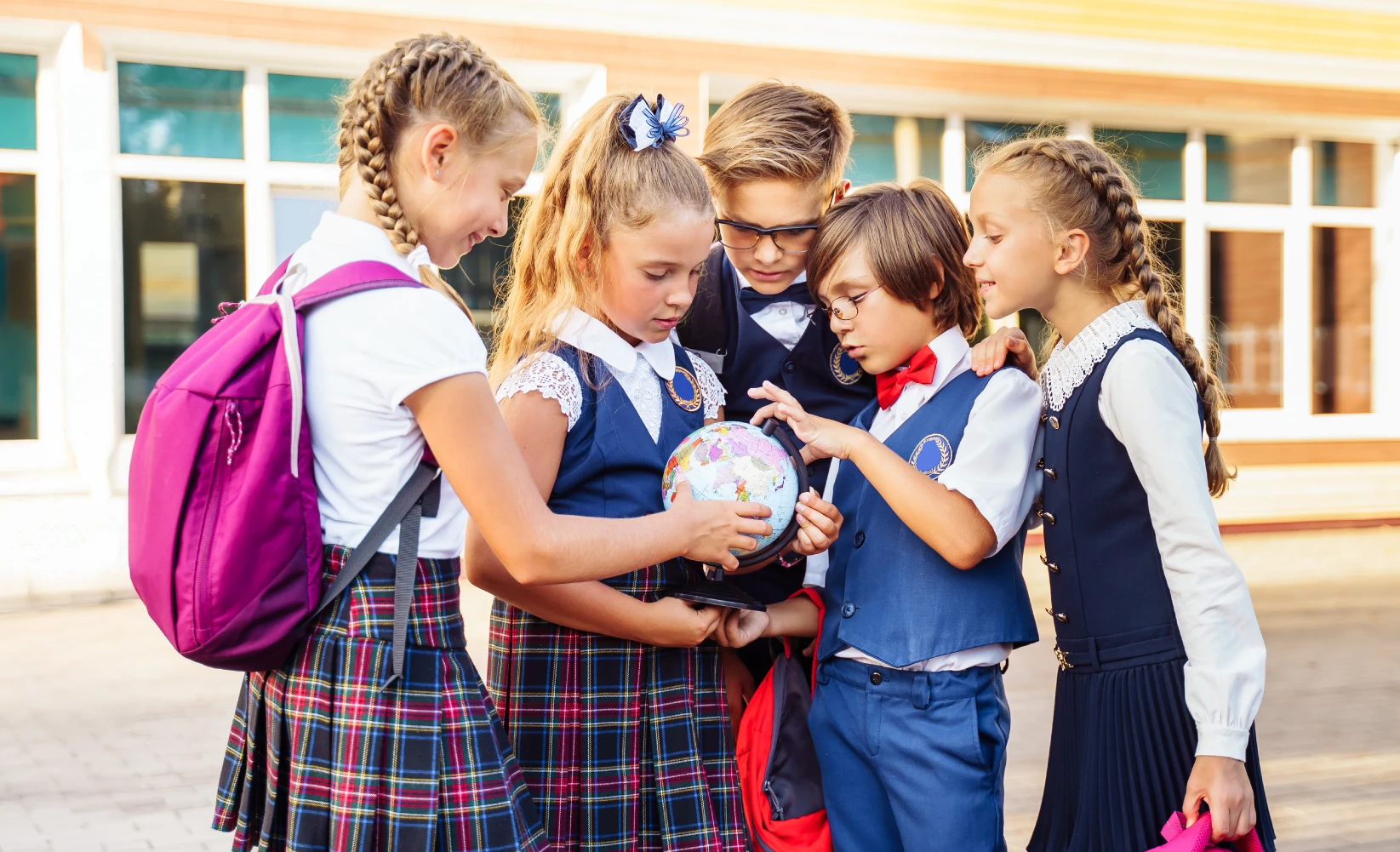
Have students explore a country from the Can Do Kids Worldwide globe and share 3 interesting facts they discover about its culture, geography, or people.
Extension: Students create a simple drawing or write a short paragraph about what they learned and present it to the class.