Education Revolution
For decades, the primary function of education was the transmission of knowledge and cognitive skills development. The teacher was the "sage on the stage". With the arrival of AI, we have entered a new era. Today, the knowledge function of education—the facts, formulae, and dates—is being largely taken over by services from numerous artificial intelligence websites.
Any student can ask a chatbot for a mathematical proof, a scientific law, or a historical summary. Therefore, the traditional role of the teacher is being transformed. The power to find information and solve problems is in the hands of the student. The traditional teacher's role as a knowledge provider is now that of a learning facilitator.
From Teaching to Facilitating
In this new landscape, learning is no longer about memorisation to pass exams; it is about problem-solving skills through discussion, sharing, and comparing. The educator's job is to create an environment where students actively process information. This is where oracy is required in the modern curriculum.
Oracy and Conversology
While literacy is the ability to read and write, oracy is the ability to communicate effectively through speaking and listening. It is the verbal equivalent of literacy and numeracy. In my work, I distinguish between these two concepts:
Conversology is the study of conversation, understanding the psychological dynamics behind effective interviews, informal discussions, and formal meetings.
Oracy in schools features hands-on activities that build speaking, listening, reasoning, and cooperation skills. In groups, students problem-solve, listen with empathy, and respond with clarity.
Virtual Questions: The Secret to Understanding in the Age of AI
Conversation can now be virtual. We help students to construct virtual questions and interview amazing people like Einstein, Curie, and Mandela.
To do this effectively, students must master Rudyard Kipling's "six honest serving-men":
- What
- Why
- When
- How
- Where
- Who
By mastering these question words, students learn to navigate information not just as data, but as a dialogue that applies to the real world.
How It Works
Students take on the role of journalists. They ask questions, for example, to Marie Curie, such as, "How did you make scientific breakthroughs?" Then, they prompt AI to gain helpful answers from the famous figure. This helps students develop face-to-face oracy skills.
Speaking: Practice with clear, confident voices.
Listening: Pay close attention to questions.
Thinking: Organise ideas and explain "why".
Teamwork: Take turns and build on each other's words.
Why Children Love It
It is like chatting with a hero! This natural conversation builds skills quickly. It is perfect for primary schools—fun and engaging ed-tech.
Global Citizenship Through Virtual Oracy
This concept of virtual oracy is expanded into global citizenship at www.CanDoKidsWorldwide.com.
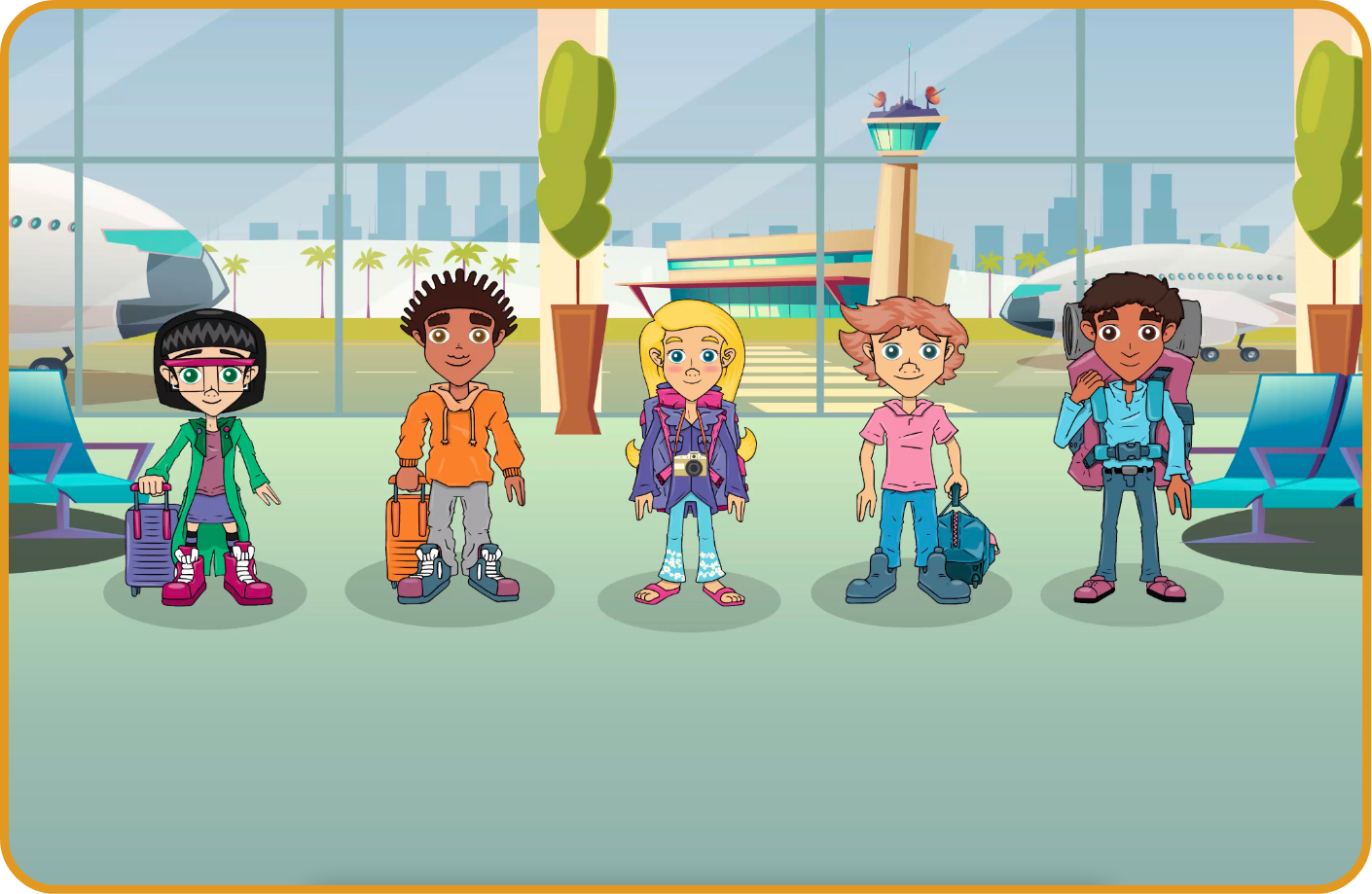
Here, students take control of their learning by interviewing the members of the Can Do Kids Band. By choosing which questions to ask the band members—Ravi (India), Lin (China), Amy (USA), Ace (South Africa), and Oz (Australia)—the student sets the pace. Whether they want to explore the spicy flavours of Indian food, the rules of Australian sport, the rhythms of South African music, or the vibrant colours of Chinese festivals, the power lies with the questioner. This interaction encourages face-to-face classroom discussions, allowing students to compare their own lives with those of their virtual peers.
The Two Faces of Oracy: Introverted and Extroverted
As a psychologist, I recognise that oracy does not look the same for every child. We must distinguish between extroverted oracy (the outward expression of ideas) and introverted oracy (the internal processing of information).
In the age of AI, introverted oracy is where the "digestion" of information happens. While AI provides the data for maths, science, or geography, the introverted function allows the student to reflect, synthesise, and internalise that data. Virtual oracy provides a controlled environment where the child learns to refine their focus, without the intimidation of a live audience.
Turning Knowledge into Achievement
The ultimate goal of the "Can Do Kid" is to convert knowledge into achievement. In the AI era, everyone has access to the same information. The difference-maker will be the development of personal strengths: practice, persistence, and application.
For example, by studying the lives of those featured in my book Amazing Careers, students see that oracy can bring knowledge to life.
Summary: Key Action Points for Can Do Kids
To thrive in the age of AI, students and education facilitators should focus on these four pillars of achievement:
1. Enhance knowledge via virtual oracy
Use platforms like Amazing People Schools and Can Do Kids Worldwide to move beyond passive reading. Use virtual oracy to "interview" history and the world.
2. Master virtual questioning
Use Kipling's "six serving-men" (Who, What, Where, When, Why, How) to take control of the learning process. The student who asks the questions owns the knowledge.
3. Balance digestion and expression
Recognise the power of introverted oracy to digest information and extroverted oracy to share it. Both are essential for personal growth.
4. Convert effort into achievement
Knowledge is only the beginning. Use self-development, consistent practice, and persistence to turn information into completed projects and real-world success.
Conclusion
The Can Do Kid of the 21st century will be the one who knows how to ask the best questions and has the persistence to follow through. By shifting our focus to "discussion in classrooms" and virtual oracy, we empower students to lead in an AI-driven world.
Dr Charles Margerison is a psychologist, author, and President of Amazing People Worldwide. With decades of experience in educational technology and storytelling, he co-founded Amazing People Schools to inspire children through interactive learning.
Classroom Activity Idea
Have students explore a country from the Can Do Kids Worldwide globe and share 3 interesting facts they discover about its culture, geography, or people.
Extension: Students create a simple drawing or write a short paragraph about what they learned and present it to the class.