 Bosnia & Herzegovina
UEFA · Europe
Bosnia & Herzegovina
Zmajevi · The Dragons
Born from independence in 1995, Bosnia and Herzegovina's Dragons reached their first World Cup in 2014 — a proud moment for a young nation building its football identity with passion, talent and determination.
🎸Hi, I am Oz!
Hi! I am Oz! Bosnia and Herzegovina only became an independent country in 1995 — so their football team is still quite young! But they already reached the World Cup in 2014 and have produced amazing players like Edin Džeko and Miralem Pjanić. The Dragons are roaring!
Quick Facts
Football Association Founded
NFSBiH — established 1992, UEFA member 1996, FIFA member 1996
Independence
Bosnia & Herzegovina declared independence in 1992, Dayton Agreement 1995
Nickname
Zmajevi — The Dragons — representing strength and national pride
Home Stadium
Bilino Polje, Zenica — capacity 15,600; also plays in Sarajevo
FIFA Confederation
UEFA — Union of European Football Associations
Domestic League
Premier League of Bosnia and Herzegovina — top tier of football in the country
Discover Bosnia & Herzegovina
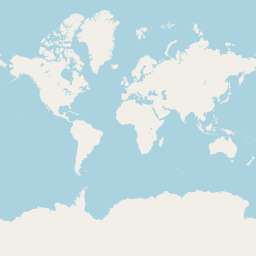
Bosnia and Herzegovina is a country in southeast Europe on the Balkan Peninsula, bordered by Croatia, Serbia, and Montenegro. It is a land of dramatic contrasts — forested mountain ranges, fast-flowing rivers, deep canyons, and a short but beautiful coastline on the Adriatic Sea at Neum. The country's interior is dominated by the Dinaric Alps, with peaks reaching over 2,000 metres, while the Neretva and Bosnia rivers flow through verdant valleys.
The capital, Sarajevo, is one of Europe's most culturally unique cities — a place where Ottoman mosques, Austro-Hungarian buildings, Orthodox churches, and Catholic cathedrals stand side by side within walking distance. Sarajevo hosted the 1984 Winter Olympics and became famous worldwide during the 1990s conflict that followed the breakup of Yugoslavia. Today, the city is a symbol of resilience and rebuilding.
With a population of around 3.5 million people, Bosnia and Herzegovina is home to three main constituent peoples — Bosniaks, Serbs, and Croats — who share the country under a complex power-sharing political structure. Despite its turbulent recent history, the country has a growing tourism industry, a passionate football culture, and a generation of young people determined to build a prosperous future in the heart of the Balkans.
Map of Bosnia & Herzegovina

🌍 Where in the World
Flag of Bosnia & Herzegovina
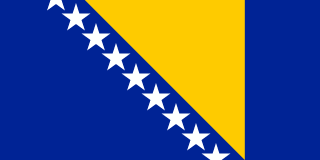
Bosnia and Herzegovina's flag features a blue background with a yellow right triangle and a diagonal row of white stars. The triangle represents the three constituent peoples of Bosnia. The stars echo the EU flag and represent Europe and the aspiration for European integration.
🏟️ The Story of Bosnian Football
Bosnia and Herzegovina's football story is one of remarkable achievement against extraordinary odds. After gaining independence in the early 1990s following the break-up of Yugoslavia and a devastating war, the nation had to build its football infrastructure almost from scratch. Many of its finest players had previously represented Yugoslavia and other successor states, making the task of creating a new national identity even more challenging.
Despite these obstacles, Bosnia and Herzegovina built a competitive team through the 2000s and into the 2010s, driven by talented players who were making their names at top European clubs. The breakthrough came at the 2014 World Cup in Brazil — their first ever qualification for the tournament. Though they were eliminated in the group stage, they came agonisingly close to advancing — a narrow defeat to Argentina, a stirring win over Nigeria, and a hard-fought draw with Iran showed that the Dragons could compete with the world's best.
The team's greatest strength has been its ability to produce world-class players despite the country's small population. Edin Džeko, who became one of Europe's most prolific strikers at Manchester City, Roma and Inter Milan, is the most famous. Miralem Pjanić became one of the finest midfielders in the world at Juventus and Barcelona. Together they gave Bosnia a footballing credibility that belied the nation's youth and size.
Key Results
- 2014🐉 First World Cup appearance — Group stage, Brazil
- 2014🔵 Beat Nigeria 1-0
- 2014🔵 Narrowly lost to Argentina 2-1
- 2026🌟 Second World Cup qualification campaign
2014
Year of Bosnia's historic first World Cup appearance — just 19 years after gaining independence
✨ Did You Know?
The Dragons' First World Cup
When Bosnia and Herzegovina qualified for the 2014 World Cup in Brazil, it was just 19 years after the Dayton Agreement ended the Bosnian War. Qualifying for the World Cup was a moment of incredible national pride — the Dragons had arrived on the world stage.
Edin Džeko — A National Hero
Edin Džeko is one of the greatest players in Bosnian history — a tall, clever striker who scored over 250 goals at Manchester City, Roma and Inter Milan. He is Bosnia's all-time top scorer and has carried the nation's footballing hopes for nearly two decades.
Miralem Pjanić — World-Class in Midfield
Miralem Pjanić grew up in Bosnia before moving to Luxembourg and then France as a child, developing into one of Europe's finest midfielders at Lyon, Roma, Juventus and Barcelona. His technical quality and passing range made him world-famous and a source of enormous Bosnian pride.
Want more football country details?
Full country pages in the app include Famous Players, Recent Events, and interactive quiz content. Log in to unlock the complete football experience.
Teachers Only
Bring the World Cup Quest into class

Explore More Football Nations
From the ashes of conflict to the World Cup stage in just 19 years — Bosnia and Herzegovina's football story is one of the most inspiring in the world. The Dragons are still roaring, and the best chapters may still be ahead.