UEFA · Europe
Croatia
Vatreni — 2018 World Cup Finalists
A nation of just 3.9 million that reached not one but two World Cup finals — Croatia's story is one of extraordinary talent, iron determination, and a national spirit that simply refuses to yield. From Šuker's golden boot in 1998 to Modrić's Ballon d'Or genius in 2018, the Blazers have given the world unforgettable moments.

🎤Hey, I am Amy!
Croatia — a nation of just 3.9 million people — reached the World Cup final in 2018! Their incredible run included wins over Denmark, Russia, and England before facing France in the final. Luka Modrić then won the Ballon d'Or, becoming the first player outside Messi and Ronaldo to claim it in over a decade. Extraordinary!
Quick Facts
First Croatian Club
Dinamo Zagreb — founded 1945
HNS Founded
1992 — Hrvatski Nogometni Savez
First League Founded
1992 — Croatian Prva Liga
Registered Male Players
Approximately 210,000 across Croatia
Registered Female Players
Approximately 24,000 and growing
Professional Clubs
10 clubs in the top division
Discover Croatia
Croatia is a crescent-shaped country on the eastern coast of the Adriatic Sea in southeastern Europe, sharing borders with Slovenia, Hungary, Serbia, Bosnia and Herzegovina, and Montenegro. It is one of Europe's most beautiful countries — blessed with over 1,200 islands along its stunning coastline, crystal-clear turquoise waters, and historic walled cities that have survived for over two thousand years. The country experiences a warm Mediterranean climate along the coast, with hot summers ideal for tourism.
Croatia is one of Europe's top tourist destinations, drawing millions of visitors each year to its spectacular national parks, UNESCO-listed cities like Dubrovnik and Split, and the stunning Plitvice Lakes — a series of terraced lakes and waterfalls that form one of Europe's most beautiful natural landscapes. The country became internationally famous as a filming location for Game of Thrones, with Dubrovnik's medieval walls serving as King's Landing.
With a population of around 4 million people, Croatia is one of Europe's newer independent nations, having declared independence from Yugoslavia in 1991. It joined the European Union in 2013 and adopted the Euro currency in 2023. Despite its small size, Croatia has had an extraordinary impact on world football — reaching the World Cup final in 1998 and again in 2018, making it one of the most successful football nations per capita in history.
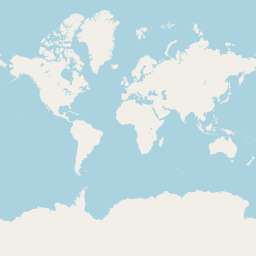
Map of Croatia

🌍 Where in the World
Flag of Croatia
Croatia's flag features three equal horizontal bands of red, white, and blue, with the Croatian coat of arms — a red and white checkerboard shield — at the centre. The checkerboard pattern, known as the šahovnica, is an ancient symbol of Croatian identity dating back over a thousand years.
⚽ The History of Football in Croatia
Football in Croatia has deep roots stretching to the late 19th century when the sport arrived from Central Europe during the Austro-Hungarian era. Croatia's footballing identity was forged largely through the Yugoslav era — clubs like Dinamo Zagreb and Hajduk Split were powerhouses, and many of the greatest Yugoslav players were Croatian. When Croatia declared independence in 1991 and joined FIFA in 1992, a new football nation was born — one that would quickly announce itself on the world stage.
Croatia's debut at the 1998 World Cup in France was nothing short of miraculous. Led by Davor Šuker, who won the Golden Boot with 6 goals, the Vatreni finished third — an extraordinary achievement for a nation playing its first World Cup. That tournament put Croatia firmly on the football map and set the standard for decades of overachievement relative to their tiny population.
The pinnacle came at the 2018 World Cup in Russia, where under manager Zlatko Dalić, Croatia reached the final — beating Denmark and Russia on penalties before defeating England in extra time, before losing to France 4–2. Luka Modrić's Ballon d'Or that year cemented Croatia's legend. Remarkably, they claimed third place again at the 2022 World Cup in Qatar, confirming that this small nation belongs permanently among world football's elite.
Key Results
- 1998🥉 3rd Place — France (debut)
- 2002Group stage — Japan/South Korea
- 2006Group stage — Germany
- 2018🥈 Runners-up — Russia
- 2022🥉 3rd Place — Qatar
- 2026Qualified — USA/Canada/Mexico
3.9M
Croatia's population — making their two World Cup finals the greatest overachievement per capita in football history
✨ Did You Know?
Modrić — Only Non-Messi/Ronaldo Winner
Luka Modrić won the 2018 Ballon d'Or — the only player other than Lionel Messi or Cristiano Ronaldo to win the award between 2008 and 2023. His genius at the World Cup and with Real Madrid earned him football's highest individual honour.
Debut 1998 — Straight to the Podium
Croatia's first-ever World Cup appearance in 1998 ended with a bronze medal. No other nation has reached the podium on their debut in the modern era — a record that speaks to the extraordinary quality of that golden generation.
The Iconic Checkerboard Kit
Croatia's red-and-white checkerboard shirt — the šahovnica — is one of the most recognisable kits in world football. The pattern mirrors the Croatian coat of arms and has been worn with enormous pride since the 1998 World Cup debut.
🌟 Famous Players
Croatia has produced world-class talent that has graced the greatest clubs in Europe.
Luka Modrić
2006–presentCroatia's captain and greatest ever player. A Real Madrid legend who won the Ballon d'Or in 2018 — the year he led Croatia to the World Cup final. Widely regarded as the finest midfielder of his generation and a true football genius.
Davor Šuker
1990–2002Croatia's first superstar after independence. Won the 1998 World Cup Golden Boot with 6 goals in France, firing Croatia to a historic third-place finish on their debut. Later became president of the Croatian Football Federation.
Ivan Rakitić
2007–2020A creative midfielder and Champions League winner with Barcelona. Scored the crucial penalty against Russia in the 2018 World Cup quarter-final shootout — ice-cold nerve that helped carry Croatia all the way to the final.
Zvonimir Boban
1990–2002One of the greatest midfielders of the 1990s and the creative heartbeat of the 1998 World Cup squad. An iconic figure in Croatian football history — legendary for his elegance, intelligence, and passion for the national cause.
Ivan Perišić
2011–2023One of Croatia's most versatile and dangerous forwards. Scored in the 2018 World Cup Final against France and was outstanding throughout the 2022 World Cup campaign too. Won the Champions League with Inter Milan in 2023.
Mario Mandžukić
2007–2019Croatia's powerful striker who scored one of the great goals in World Cup Final history — an overhead kick against France in 2018 to make it 2–1 before Croatia eventually lost 4–2. Also won the Champions League with Real Madrid.
📰 Recent Events
FIFA World Cup — Qatar
Croatia claimed a remarkable third-place finish in Qatar, defeating Morocco 2–1 in the bronze medal match. Three tournament podiums in just 25 years of international football — an extraordinary record for a nation of 3.9 million.
UEFA Euro 2024 — Germany
Croatia competed at Euro 2024 in Germany, reaching the group stage. The tournament marked a transitional period as Croatia's golden generation began to hand over to younger players inspired by Modrić and the 2018 heroes.
Modrić Retires From International Football
Luka Modrić announced his retirement from international duty following Euro 2024 — ending a remarkable 18-year career spanning 180 caps. He guided Croatia to two World Cup finals. An era of Croatian football came to a poignant close.
FIFA World Cup — USA, Canada & Mexico
Croatia qualified for their seventh World Cup — a new generation stepping forward to honour the checkerboard legacy. The Vatreni spirit endures, and Croatia will once again compete on football's greatest stage.
Explore More Football Nations
Two World Cup finals from a nation of 3.9 million — Croatia's achievement is the stuff of football legend. With the Vatreni spirit eternal and a new generation stepping forward, the story is far from over.