World Instruments
Every culture on Earth has its own unique musical instruments — from ancient bamboo flutes and carved drums to horsehair fiddles and 68-string lutes. Explore incredible instruments from across our world!
Showing 25 instruments · sorted alphabetically

Angklung
Angklung
Each angklung instrument plays ONLY ONE NOTE — so to perform a melody, you need as many players as there are notes in the scale! A full angklung performance is a deeply communal act — every person plays their one note at exactly the right moment.
View fact file →

Bagpipes
Am Pìob Mhòr
Scottish bagpipes have no off switch — once inflated, all the drones keep sounding constantly. The player maintains constant air pressure in the bag using their arm while simultaneously breathing normally. The instrument never goes silent between phrases.
View fact file →

Balalaika
Балалайка
The balalaika has a triangular body — completely unique among stringed instruments. It comes in six different sizes, from the tiny piccolo to the enormous contrabass balalaika that stands taller than a person!
View fact file →

Bandura
Бандура
The bandura can have up to 68 strings — more than a concert harp! It combines the bass strings of a lute with treble strings of a zither, all in one instrument. Historically it was played by blind wandering musicians called kobzars.
View fact file →

Berimbau
Berimbau
The berimbau is a musical bow with only ONE metal string — but the player varies the pitch by pressing a coin or stone against the string while tapping it with a stick. A gourd resonator amplified by the body creates the sound.
View fact file →

Cajón
Cajón (Spanish: "box")
The cajón was born from oppression — when African slaves in colonial Peru had their drums confiscated by Spanish authorities, they improvised by turning wooden shipping crates and drawers into drums. The player sits ON the instrument and strikes the front face.
View fact file →

Charango
Ch'araku (Quechua)
The traditional charango body was made from the shell of an armadillo (specifically a mulita armadillo) — the animals were so revered in Andean culture that using their shells to make music was considered a spiritual act.
View fact file →

Didgeridoo
Yidaki (Yolŋu name)
The didgeridoo is played using circular breathing — a technique where the player breathes IN through the nose while pushing air OUT through the mouth using cheek muscles. Masters can play without stopping for 40 minutes straight!
View fact file →
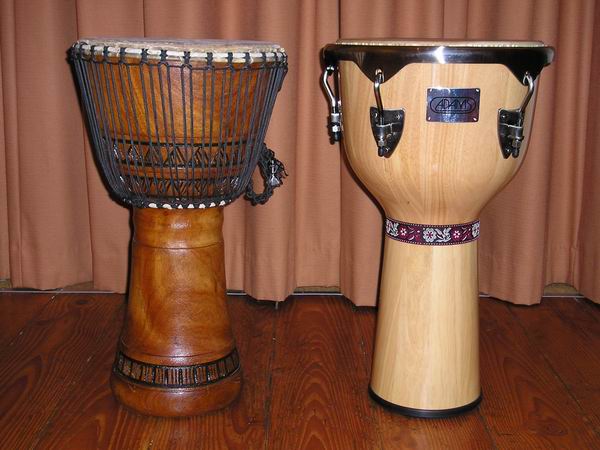
Djembe
Dyèmbe
The djembe can produce three distinct tones — bass (open centre hit), tone (rim hit, fingers flat), and slap (sharp rim hit, curved fingers). A master player can "talk" entire conversations through the drum.
View fact file →

Duduk
Դուդուկ
The duduk is made exclusively from Armenian apricot wood — no other wood produces its characteristic velvety, warm sound. Armenia is the world's largest producer of apricots, and the tree is considered a national symbol.
View fact file →

Erhu
二胡
The erhu has only two strings — but its bow is permanently trapped BETWEEN them, not on the outside. The hair of the bow runs through the strings and can never be removed without taking the instrument apart!
View fact file →

Gamelan
Gamelan
Gamelan is not one instrument — it's an entire orchestra of gongs, metallophones, xylophones, drums, and flutes that all belong together as a set. Each gamelan is unique and tuned only to itself — you cannot mix instruments from two different gamelans, as each has its own complete tuning system.
View fact file →

Hardanger Fiddle
Hardingfele
The Hardanger fiddle has EIGHT strings — four played with the bow and four sympathetic strings running UNDERNEATH the neck that vibrate in resonance, creating a haunting, echo-like quality unlike any other fiddle in the world.
View fact file →
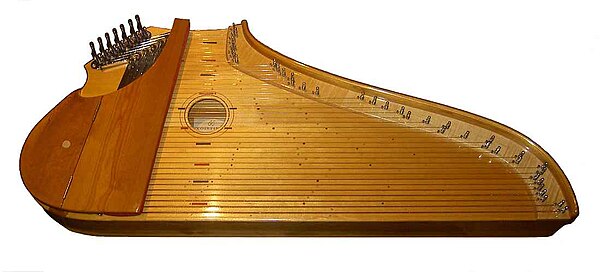
Kantele
Kantele
According to the Finnish national epic, the Kalevala, the kantele was invented by the hero Väinämöinen — who carved the first one from the jawbone of a giant pike fish, then strung it with the hair of a young woman.
View fact file →

Kora
Kòra
The kora has 21 strings arranged in two parallel rows — the player holds it with both thumbs and index fingers, plucking the strings alternately in a cascading, harp-like waterfall of sound.
View fact file →

Koto
琴
The koto is 1.8 metres long — about as long as a tall person — and lies flat on the floor. Each of its 13 strings has its own moveable bridge (called a ji), which the player adjusts before each piece to create the desired scale.
View fact file →

Marimba
Marimba
The Guatemalan marimba can be so large it requires 6 players standing in a row, sharing a single instrument up to 4 metres wide. Each player has their own section of keys to cover.
View fact file →

Mbira
Mbira dzavadzimu
The mbira is traditionally placed inside a large gourd resonator (deze) to amplify its sound. Bottle caps or shells threaded onto wires add a buzzing, rattling quality — considered essential to the sound, not a flaw.
View fact file →

Morin Khuur
Морин хуур
The morin khuur (horse-head fiddle) is crowned with a carved horse's head at the top of its neck. According to Mongolian legend, the instrument was made from the bones and hair of a beloved horse that died.
View fact file →

Oud
عود
The oud has NO frets — the neck is completely smooth. This allows Arabic musicians to play the microtones (quarter-tones and smaller intervals) that are impossible on fretted Western instruments and give Arabic music its distinctive emotional quality.
View fact file →

Saung
စောင်းကောက်
The saung is the ONLY surviving arched harp in Asia — all other Asian harps died out centuries ago. It has been played continuously in Myanmar for at least 1,500 years without interruption, making it one of the world's oldest surviving instruments still in active use.
View fact file →

Sitar
सितार
The sitar has up to 21 strings — but you only play on 6 or 7 of them! The rest vibrate sympathetically, creating its rich, shimmering sound.
View fact file →

Steel Pan
Steel drum
The steel pan is the ONLY major acoustic musical instrument invented in the 20th century — and it was made from discarded oil drums by young people in the slums of Port of Spain, Trinidad, in the 1930s and 1940s.
View fact file →

Tabla
तबला
The tabla is actually TWO drums — the smaller right drum is called "tabla" and the larger bass drum is called "bayan". Players tune them to specific pitches before every concert!
View fact file →
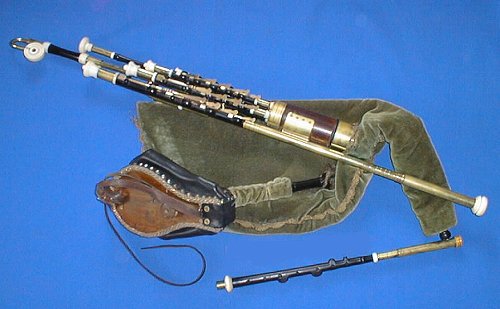
Uilleann Pipes
Píobaí Uilleann
Unlike Scottish bagpipes, uilleann pipes are inflated with bellows strapped to the arm — not by blowing. This means the player can sing while playing, and conversations can happen between tunes without the instrument deflating!
View fact file →
Explore the Countries Behind the Music
Can Do Kids Worldwide covers 100+ countries with Explorer Guides, quizzes, and virtual travel. Every instrument comes alive when you explore the culture and geography behind it.